If you’ve ever stood next to an old, clunky axial flow fan in a warehouse, server room, or even a big greenhouse, you know the vibe—constant loud whirring, blowing way more air than you need when it’s not that hot, or barely moving any air when you actually need it, just wasting energy. I’ve been selling axial flow fans for over 10 years now, and the number one question I get from clients these days isn’t “how much does this cost” — it’s “can this thing not be a brainless box that just spins nonstop?” Axial Flow Fans

For a long time, the answer was… not really. Most axial flow fans were basically just a motor attached to blades, wired straight to a switch: on or off, high or low, no in-between. But these days? The smart ones are actually a total game-changer, and I’ve watched my client base shift hard from traditional fans to smart axial flow models in the last 5 years alone. Let me break down what makes these “smart” beyond just a random app download, and why they’re worth ditching that old setup for.
First, let’s get the basics right: a smart axial flow fan works on the same core blade and motor design as a standard axial fan—so it still moves that volume of air like you’d expect, no loss in performance—but it’s got a whole control system bolted on that lets it react to its environment, not just a human flipping a switch. The key features that set the good ones apart? Let’s start with the big one: integrated environmental sensing. No, not just a temperature sensor stuck on the side (though some cheap ones do that), but a whole suite of sensors that talk to each other. For example, if you’re using these in a server room, you’ve got temperature and humidity and even particulate matter sensors. If the humidity spikes above 45% (the sweet spot for server hardware), the fan automatically ramps up to pull that moist air out. If the temperature drops to a comfy 68°F, it slows way down instead of blowing full tilt all night. I installed a batch of these for a data center in Chicago last year, and their electricity bill for the floor with these fans dropped 22% in the first quarter—no joke. The old fans would run 24/7 at medium just to be “safe,” even in the middle of a cold Chicago winter.
Another advanced control feature a lot of folks don’t hear about: predictive maintenance scheduling. Old axial flow fans require you to grease the motor, check the blade alignment, replace the belt (wait, some still use belts!) every 3-6 months, whether they need it or not. Smart ones have built-in vibration sensors, motor temperature monitors, and even current draw trackers. If the motor’s vibration starts spiking because a blade is slightly bent, or the bearing is wearing out, the fan sends an alert to your phone or your facility management system 30 days in advance of it failing. That’s a big deal for places like manufacturing plants where a fan dying mid-shift means shutting down a production line that costs $10k an hour. A food processing client of mine used to have a rule: every fan gets rebuilt once a year, no exceptions. Now they only do maintenance when the fan says it needs it, and they’ve cut maintenance labor costs by 35% already. No more wasting time taking apart a perfectly good fan just because the calendar said so.
Wait, let’s talk about connectivity, because that’s where a lot of “so-called smart fans” fall flat. A lot of cheap models use super limited Bluetooth that only works if you’re standing 10 feet from the fan, or a clunky app that crashes every time your Wi-Fi flickers. The good smart axial flow fans use standard industrial protocols—Modbus, BACnet, even MQTT for IoT setups—so they can talk to your building’s existing management system, your HVAC network, or even a custom monitoring platform you already use. That means you don’t have to learn a whole new software suite just to control your fans. I had a client with a 100,000 sq ft warehouse who tried those cheap smart fans a few years ago and dumped them because they couldn’t integrate with their existing facility system. Now they use the ones we supply, and they can adjust fan speeds for different zones (like the loading dock, which is always drafty) from their office PC, no need to run to each fan to tweak a dial.
One more feature I’m really excited about: adaptive airflow control, sometimes called demand-based ventilation. This is different from just reacting to temperature—these fans have algorithms that learn how your space works over time. For example, a greenhouse that opens its vents every morning at 8 AM, or a restaurant kitchen where the kitchen exhaust fan needs to ramp up when the grills turn on at lunch, or a warehouse that gets a spike in foot traffic and forklift movement between 10 AM and 2 PM. The smart fan learns those patterns, adjusts its speed automatically, and even works with other smart devices. Last month, a brewery client had a smart axial flow fan in their fermentation room. It knows that fermentation produces excess heat and CO2, and it’s timed to ramp up when a new batch starts, and slow down once fermentation is complete. That’s not something a traditional fan can do—you’d have to have someone manually adjust it 24/7, which is unrealistic for a busy brewery.
Now, I’m not gonna lie: smart axial flow fans are a little more expensive upfront than the basic ones. But when you add up the energy savings, the reduced maintenance costs, and the fact that you’re less likely to have a system failure that costs you money? They pay for themselves in 18-24 months, max. I’ve seen clients go from “this is too pricey” to “we should have switched years ago” within the first 6 months of installation.
But here’s the thing: not all smart axial flow fans are created equal. A lot of brands slap a $10 temperature sensor on a standard fan, call it smart, and charge double. The real advanced ones have built-in edge computing, meaning they process data on the fan itself instead of sending every single sensor reading to a cloud server. That means if your internet goes down, the fan still works—no lag, no downtime. I had a client in a remote mining town last year who had internet outages for 3 days during a storm. Their old “cloud-only” smart fans stopped working entirely when the internet went down. The ones we supplied? They kept running, adjusting to the cave’s temperature and humidity, no issues. That’s the kind of reliability you can’t beat.
So who are these fans for, anyway? If you’re running a data center, a warehouse, a manufacturing plant, a greenhouse, a restaurant kitchen, a server room, or even a commercial gym where ventilation is key—these are made for you. I’ve even supplied a few to small apartment buildings for rooftop ventilation, where the property manager can adjust fan speeds remotely without sending a tech up on the roof every time the weather changes.
Now, if you’re thinking “hey, I want to check these out, or ask more specific questions for my space,” I’m here to help. I’ve been in this game long enough to know that every space is different—what works for a greenhouse won’t work for a server room, and vice versa. I can walk you through the best model for your needs, help you size it right, and even work with your team to integrate it into your existing setup. No pressure, no sales pitch that makes you regret picking up the phone.
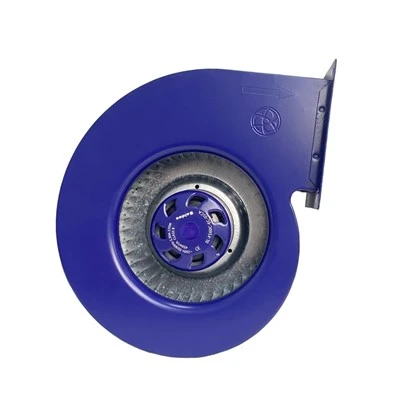
If you’re tired of wasting energy on a fan that’s either too loud or not doing enough, if you’re sick of scheduling maintenance that you don’t need, or if you just want peace of mind that your ventilation system won’t fail when you need it most, reach out to chat. We can get you a custom quote, walk you through case studies from clients just like you, and answer any questions you have.
Forward Centrifugal Fans References
- ASHRAE. (2022). Advanced Fan Control Strategies for Commercial Ventilation Systems. ASHRAE Journal, 64(5), 45-52.
- International Energy Agency. (2021). Energy Efficiency in Motor-Driven Systems: Fan Technologies. IEA Publications.
- Underwriters Laboratories. (2023). Smart Ventilation Fan Performance and Safety Standards. UL 7100.
Suzhou Blauberg Motoren Technology Co., Ltd.
Suzhou Blauberg Motoren Technology Co., Ltd. is one of the most professional axial flow fans manufacturers and suppliers in China, featured by quality products and good service. Please rest assured to buy bulk customized axial flow fans from our factory. Welcome to contact us for quotation.
Address: No. 8, Zhu Street, Industrial Park, Suzhou, JiangSu, China
E-mail: Andie@blauberg.cn
WebSite: https://www.blaubergmotors.com/
