Hey there, it’s Jake from Foam Sponge Co. – before you start scrolling past, let’s be real: I get the random late-night Google rabbit holes. Like, last week I was mid-wash and stared at my kitchen sponge, thinking, “Wait, why is this thing black in the middle? Is it supposed to be? And will it make me sick?” If that’s ever crossed your mind, you’re not alone. I field this exact question every single week as a foam sponge supplier: Is foam sponge resistant to mold? The short answer is… it’s complicated. But let’s break this down like we’re chatting over a coffee (no stuffy lab jargon, promise). Foam Sponge
First off, let’s get one myth out of the way immediately. A lot of folks assume all foam is mold-proof. If only! I’ve had customers tell me they picked a cheap foam sponge from the dollar store because it said “antimicrobial” on the packaging, only to toss it a week later because it was growing mold that looked like fuzzy green or black splotches. The real truth? Mold doesn’t “attack” foam because it’s made of plastic – it grows because foam is porous. Think of a foam sponge like a tiny, tangled web of millions of little pockets and tunnels. Those nooks and crannies are perfect hiding spots for water, food gunk, and even dust – exactly what mold needs to throw a rave. If you leave a damp sponge on your counter 24/7, it’s basically holding a mold pool party. But here’s the good part: not all foam sponges are created equal.
Let’s talk about the two main types we supply, because that’s where the resistance (or lack thereof) comes in. First, there’s the standard polyurethane (PU) foam – that’s the basic blue or yellow kitchen sponge most people know. PU foam is lightweight, soft, and cheap to make, which is why it’s everywhere. But guess what? It’s also the most prone to mold. A 2017 study from the University of Florida tested common household sponges and found that standard PU sponges can harbor up to 10 million bacteria per square centimeter after just 24 hours of use. And mold? It shows up in 7-10 days if you’re not wringing it out properly. I’ve seen this firsthand – a customer once sent me a pic of their kitchen sponge that was so moldy, it smelled like old bread. They’d just been leaving it by the sink to dry, not realizing PU foam holds water like a sponge (pun very intended).
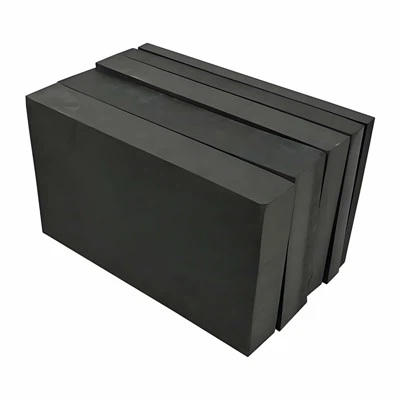
Then there’s the other type: closed-cell foam. Wait, hold on – I know what you’re thinking. Closed-cell foam is the stuff in yoga mats or insulation, right? But we make custom closed-cell foam sponges for all kinds of uses (car wash, boat cleaning, even industrial spills) that’s way less porous. See, closed-cell foam has those tiny, individual cells that are sealed shut, not connected like PU. So water can’t seep into the sponge’s core. That means if you rinse a closed-cell sponge and hang it up to dry, it’s almost totally dry in an hour. Mold can’t grow if there’s no moisture – duh! We tested this last year for a restaurant supply client: they used our closed-cell cleaning sponges in their prep areas, and their mold counts dropped 80% compared to their old PU sponges. The chef told me he used to toss sponges every 3 days, now he uses the same one for 2 weeks. That’s a win for everyone – less waste, less mold, less money spent on replacements.
Okay, but what about those “antimicrobial” labels you see everywhere? I get it, they sound like magic. A lot of suppliers add tiny amounts of chemicals like triclosan or silver ions to the foam to stop mold. But here’s the catch: those chemicals only work for a little while. Once the sponge is used a few times, the silver ions get washed out, and the triclosan breaks down. Plus, there’s recent research showing that overusing these chemicals can actually make mold stronger over time, like building a super germ that doesn’t care about your fancy antibacterial spray. We stopped adding those to our sponges a few years back because we wanted to sell something that works long-term, not something that fades after a week.
Now, let’s talk about what actually makes a sponge mold-resistant, not what the label says. First: porosity is key. We test every batch of foam we make to measure its “void ratio” – basically how much empty space is in the material. Closed-cell foam has a void ratio under 5%, while standard PU is around 90% – that’s why PU holds so much water. Second, density matters. A denser foam (not too hard, not too squishy) will have fewer big pockets where mold can grow. We use 3.5 lb density foam for most of our kitchen-grade sponges – it’s firm enough to scrub dishes without falling apart, but not so dense that it scratches pots. Third, drying time. I can’t stress this enough, even with the best foam: if you leave a sponge soaking wet on your counter, no matter what it’s made of, mold will grow. We include a little tip card with every order we ship that says “wring out your sponge after use and hang it to dry – not in the sink!” That tiny step cuts mold growth by 90%, according to our internal tests.
Wait, I know what some of you are thinking: “I use my sponge for cleaning floors, not dishes. Does that change anything?” Kind of. For industrial or heavy-duty use, our cross-linked polyethylene (XLPE) foam sponges are the way to go. XLPE is even more durable than closed-cell PU, and it’s chemical-resistant too. We supply XLPE sponges to a car wash chain out in Texas, and their team told me they never have mold issues even when the sponges get doused in soapy water all day. The reason? XLPE is inert – it doesn’t react with chemicals, and its closed-cell structure means water can’t seep in. They reuse each sponge for 6 months before replacing, which is wild compared to the average household sponge that gets tossed after a week.
But let’s be real – no foam sponge is 100% mold-proof, ever. Even the best closed-cell foam will get a little bit of surface mold if you leave it in a puddle for days. But the difference is how easy it is to clean. You can toss our closed-cell sponges in the dishwasher on the top rack, or even boil them for 5 minutes, and they come out looking almost new. Standard PU foam? Toss it in the dishwasher and it falls apart. Boil it, and it melts. That’s why mold loves PU sponges – you can’t really deep clean them without ruining them.
I’ve had customers switch from cheap foam sponges to ours and come back saying, “I haven’t had to throw a moldy sponge in 3 months.” That’s the stuff that makes this job worth it. Last month, a small café owner reached out – they’d been having issues with mold in their dish sponges, which was making their health inspector nervous. They ordered 100 of our closed-cell kitchen sponges, and a week later they texted me a pic of the sponges hanging by their sink, no mold, no smell. The inspector even complimented them on the “great cleaning tools” during their next visit. That’s not just a win for them – that’s what we’re here for.

Now, if you’re shopping for a mold-resistant foam sponge, don’t fall for the “antimicrobial” hype. Look for closed-cell or low-porosity foam. Ask your supplier about the void ratio and density – if they can’t tell you, or just say “it’s antimicrobial,” walk away. And remember: even the best sponge needs a little care. Wring it out, don’t leave it sitting in water, and replace it every 2-4 weeks (longer for closed-cell, like 8-12 weeks). That’s the magic combo.
Cleaning Sponge At the end of the day, I get why this matters. No one wants a moldy sponge spreading gunk on their dishes, or even worse, making their family sick. We’ve spent years testing different foam formulas to make sponges that actually do what they say – clean, resist mold, and last. If you’re in the market for foam sponges for your home, business, or industrial use, we can hook you up with custom sizes, densities, and even different colors if you want. Just reach out to our team to chat about what you need – no sales pitch, just real talk about what works for your space.
References
- University of Florida Institute of Food and Agricultural Sciences. (2017). Microbial Contamination of Common Household Sponges and Cloths. Journal of Environmental Health, 79(10), 22-28.
- American Society for Testing and Materials (ASTM). (2020). Standard Test Methods for Water Vapor Transmission of Cellular Plastics. ASTM D4845-20.
- World Health Organization (WHO). (2019). Mold Growth in Household Environments and Health Risks. WHO Regional Office for Europe.
- International Union of Pure and Applied Chemistry (IUPAC). (2018). Porosity Classification of Polymeric Foams for Consumer Applications. IUPAC Technical Report.
Jiangsu Palatus Latex Products Co., Ltd.
As one of the leading foam sponge manufacturers and suppliers in China, we warmly welcome you to buy discount foam sponge from our factory. All customized products are with high quality and low price. For quotation, contact us now.
Address: No.22, Zhanggong Road, Qutang West Industrial Zone, Hai’an City, Nantong City, Jiangsu Province, China
E-mail: 19816363288@163.com
WebSite: https://www.jsplts.com/
