If you’ve ever walked past a conveyor line in a warehouse, watched a garage door lift smoothly, or seen a mixer churn batter in a commercial bakery, you’ve used a gear motor. For over a decade, I’ve worked with gear motors as a supplier, and I still get questions from clients who think they’re overcomplicated, or that a gear motor is just a regular motor with a fancy box on the side. Let me break this down simply, based on what I’ve seen in the field, not just textbook jargon. Gear Motor
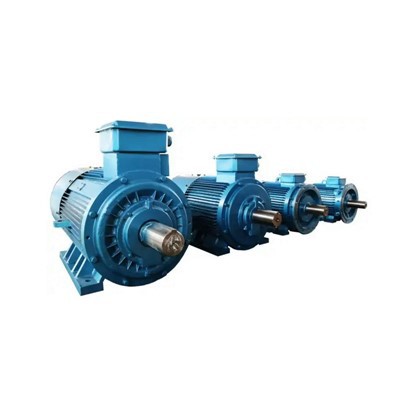
First, let’s start with the two core parts that make a gear motor what it is: the electric motor (or sometimes hydraulic or pneumatic, but 90% of what we supply are electric) and the gearbox. If you take a standard AC motor, the part that spins inside is the rotor. When electricity flows through the stator (the stationary part around the rotor), it creates a magnetic field that pulls and pushes the rotor, making it spin. A typical induction motor spins really fast though—like 1,800 or 3,600 revolutions per minute (RPM) for most standard models. That’s way too fast for 99% of the applications that reach out to my team. You can’t spin a package conveyor at 3,600 RPM; things would fly off the belt. You need that speed dialed down, and that’s where the gearbox comes in.
The gearbox is the “gear” part of gear motor, and it’s designed to do two key things: reduce speed and increase torque. Torque is the twisting force that turns motion into work. Think of trying to open a stuck jar: you need low speed, but lots of twisting force to break it free. That’s exactly what a gear motor does. Gears are wheels with teeth that mesh together, and when you connect multiple sets of gears, you create a gear ratio. A 5:1 ratio, for example, means every 5 full spins of the input shaft (connected to the motor) makes the output shaft (the part that does the work) spin once. So that 3,600 RPM motor becomes 720 RPM at the output, and torque goes up by the same ratio—5 times more twisting power. That’s a basic explanation, but there are different types of gearboxes, and I’ve found matching the right type to the application is half the battle when I work with clients.
Let’s talk about the most common gear configurations we supply, because not all gear motors are the same. First, parallel shaft gear motors. These have gears that sit on parallel axes, so the input and output shafts are lined up next to each other. We use these a lot for conveyor systems, because they’re durable, can handle high torque loads, and are easy to mount to frame rails. Last year, we worked with a food processing plant that needed to upgrade 12 conveyor lines for canned goods; parallel shaft gear motors were the perfect fit because they handle constant running loads without overheating.
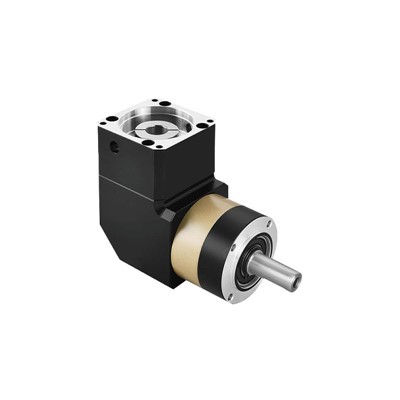
Then there are right-angle gear motors, where the input shaft and output shaft are at a 90-degree angle. These are super useful for tight spaces. If you have a conveyor that turns a corner, or a garage door opener that’s mounted above the door track, you need the output to turn perpendicular to the motor’s spin. We also sell a lot of these for automated gate systems, because they fit neatly into the side post of the gate without taking up extra space. The downside of right-angle units is that they can lose a tiny bit of efficiency because the gears have to turn at an angle, but for most applications, that tradeoff is worth it for the space savings.
Planetary gear motors are the third type, and these are the ones we reach for when we need high torque in a small package. Instead of two or three external gears meshing, planetary gears sit around a central sun gear, like planets orbiting the sun. This design distributes the load evenly across multiple gears, so you get way more torque in a smaller footprint than parallel or right-angle units. We’ve supplied these for packaging machinery that runs at high speeds and needs precise control, like a machine that wraps candy bars; the planetary gear motor keeps the wrapper aligned perfectly, even at high output speeds. The only thing I remind new clients is that planetary units can be more expensive upfront, but they last longer in heavy-duty, high-cycle applications, so the total cost of ownership is lower.
Now, a common question I get: do gear motors work any differently than just a motor and a gearbox bought separately? Short answer: no, not functionally, but there are big practical differences. When you buy them separately, you have to make sure the motor and gearbox are compatible—same shaft size, mounting pattern, input speed. We test every gear motor we sell as a single unit, so you don’t have to worry about mismatched parts, alignment issues during installation, or warranties that are split between two different manufacturers. A lot of small business owners I talk to don’t realize that a bad connection between a motor and gearbox can lead to 20% more energy waste and frequent breakdowns. That’s one of the reasons my team emphasizes selling fully assembled, tested gear motors instead of separate components.
Let’s walk through a real example to make this concrete. A few months back, a local logistics company contacted us because their existing conveyor motors kept failing every 6 months. They had bought a cheap combination of a motor and a generic gearbox, and the units were overheating because the gear ratio was wrong for the constant load of moving heavy pallets. We did a site audit, measured how fast the conveyor needed to move (they needed 20 RPM at the output, not the 50 RPM their old setup had), and recommended a right-angle gear motor with a 90:1 ratio, sized specifically for pallet loads over 2,000 pounds. We installed them, and 8 months later they reached out to order 15 more units—said the new ones were running noiselessly, no overheating, and the maintenance team had barely had to touch them. That’s the value of getting it right, not just buying whatever’s cheapest.
Now, let’s touch on efficiency, because that’s a big concern for clients looking to cut energy costs. Every gearbox has some energy loss from friction between meshing gears, and that adds up. Parallel shaft gear motors tend to be about 90-95% efficient, right-angle around 85-90%, and planetary can be up to 97% efficient. That difference might sound small, but over a year of constant operation, that can add up to thousands of dollars in energy savings. For example, a 1 HP gear motor running 24/7 will cost about $800 a year in electricity if it’s 90% efficient, and around $750 if it’s 97% efficient. It’s not a huge number for a single unit, but for a warehouse with 50 gear motors, that’s $2,500 a year in extra costs from inefficient gear motors. I always make a point to walk clients through that, because a more efficient unit often pays for itself in a year or two, even if it costs a bit more upfront.
What about maintenance? That’s another question I get all the time, because no one wants to deal with downtime. The good news is that gear motors are pretty low-maintenance, especially if you buy a quality unit. Most modern gear motors have sealed gearboxes, so you don’t have to change the gear oil like you did with old models. You just need to check the mounting bolts regularly to make sure they’re tight, and keep the motor and gearbox free of dust and debris, especially if you’re working in a dusty environment like a sawmill or construction site. We do recommend annual inspections if the unit is running 24/7, but most industrial gear motors will run for 10-15 years with only basic maintenance. I’ve had clients tell us our gear motors have been running for 18 years with no major issues, and that’s from proper installation and occasional cleaning.
Wait, what about variable speed? A lot of clients ask if gear motors can adjust their speed. Yes, most of the gear motors we sell can be paired with a variable frequency drive (VFD), which lets you adjust the output speed from as slow as a few RPM up to the motor’s maximum rating. That’s perfect for applications like mixers, where you might want a slow mix for batter and a faster mix for a thinner liquid, or conveyor lines that need to speed up during peak hours. The key here is making sure the gear motor is designed to run with a VFD; some lower-quality units can overheat if they’re run at very low speeds for long periods, because the fan for the motor relies on the motor’s spin to cool it. We only supply gear motors that are rated for VFD operation, so our clients don’t run into that problem.
Let’s address a common misconception too: gear motors are only for industrial use. Sure, they’re everywhere in factories, warehouses, and construction sites, but you’ll find them in everyday items too. The automatic window on your car? Probably a small gear motor. The recliner that moves smoothly at the push of a button? Gear motor. The office printer that feeds paper and folds documents? Yep, that’s a tiny gear motor working. It’s not just big, heavy-duty stuff—gear motors are how we turn electric energy into controlled, useful motion for almost anything that needs to move with force.
Now, if you’ve read this far, you might be wondering if a gear motor is right for your application. Maybe you’re a facility manager tired of frequent conveyor motor breakdowns, a small business owner looking to upgrade your packaging line, or someone installing an automated gate or garage door. At the end of the day, the best gear motor isn’t the cheapest one, or the biggest one—it’s the one sized and configured for exactly what you need to do, whether that’s moving heavy pallets, wrapping candy bars, or lifting a residential garage door. We work with clients across all industries, from small local bakeries to large national logistics companies, to match them with the right gear motor, offer installation support, and back every unit with reliable service. If you’re looking to upgrade your existing equipment or source gear motors for a new project, feel free to reach out to our team to discuss your specific needs. We don’t do one-size-fits-all solutions, because we know that when it comes to motion control, getting it right makes all the difference in efficiency, reliability, and long-term cost.
Brushless Motor References
- Bolton, W. (2015). Mechanisms and Mechanical Devices Sourcebook (5th ed.). McGraw-Hill Education.
- Shigley, J. E., & Mischke, C. R. (2020). Standard Handbook of Machine Design (4th ed.). McGraw-Hill.
- Gear Motor Efficiency and Application Guidelines. (2022). Industrial Motor and Control Association (IMCA) Technical Bulletin.
- Planetary, Parallel Shaft, and Right-Angle Gear Motor Performance Specifications. (2021). Motion Control Association Industry Report.
Zibo Auric Mechanical and Electrical Technology Co., Ltd.
As one of the leading gear motor manufacturers and suppliers in China, we warmly welcome you to buy advanced gear motor for sale here from our factory. All customized motors are with high quality and competitive price.
Address: B419, High-tech Entrepreneurship Park, High-tech Zone, Zibo City
E-mail: cui@auricmotor.com
WebSite: https://www.auricmotor.com/
