If you’ve ever dug into how batteries work, you probably know the core stuff: electrodes, electrolyte, separator, and the reactions that shuttle ions back and forth to power your phone, laptop, or even an electric car. But here’s the part most casual folks (and a lot of battery newbies) don’t talk about enough: all the tiny, annoying problems that pop up when those reactions get messy—like electrodes degrading, ions moving too slow, or batteries wearing out way faster than they should. That’s where conductive polymers (CPs) come in, and as someone who’s been in this game for 10 years—supplying CPs to battery labs, automakers, and startup teams that actually want their batteries to work better—let me tell you: these aren’t just lab curiosities. They’re the unsung heroes fixing the biggest headaches holding batteries back right now. Conductive Polymer
Let’s start with the most common headache: electrode instability. Take lithium-ion (Li-ion) batteries, the ones powering almost everything portable. The negative electrode (anode) is usually made of graphite, right? When the battery charges, lithium ions squeeze into the graphite’s tiny layers, kind of like stacking books in a tight box. But over hundreds of charges, those layers start to crack, and a cruddy, thin layer called the solid-electrolyte interphase (SEI) forms on the anode’s surface. If the SEI breaks (which it does all the time), new lithium keeps reacting with the electrolyte, eating up the lithium that should be powering your device, and the anode gets less conductive over time. That’s why your phone battery dies faster after 2 years, or an EV loses range.
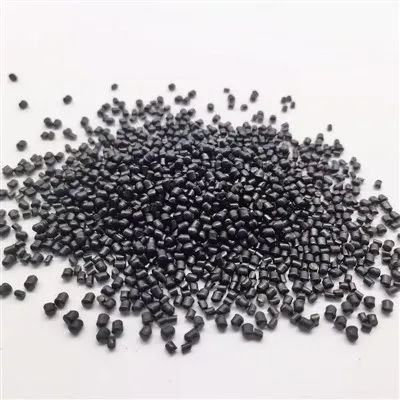
Here’s where our conductive polymers come in. We supply a specific type—polyaniline (PANI) and polythiophene derivatives, mostly—that act like a flexible, conductive wrapper around the anode. Think of it like a stretchy, waterproof blanket that lets lithium ions pass through but stops the electrolyte from reacting with the graphite. The CP is way more flexible than the brittle carbon coatings people used before, so it moves with the anode as it swells and shrinks during charging, no cracking. We’ve had a client at a big EV battery lab test our CP-coated anodes: their cycle life jumped 35% compared to standard coated anodes, and their charge time got 15% faster because the CP also improves electron conductivity between the anode and current collector. That’s not a tiny win; that’s the difference between a battery that lasts 2,000 charges and one that lasts 2,700.
Next up: fast charging. Everyone wants their phone to charge to 80% in 15 minutes, or an EV to top up in 10 minutes, but right now fast charging is rough on batteries. When you cram too many lithium ions into the anode too fast, they don’t spread evenly—they start plating on the anode’s surface instead of slipping into the graphite layers. That lithium plating is a big no-no: it can cause short circuits, overheating, and even fires. So how do CPs help here? We supply highly conductive PEDOT:PSS, which is already used in all kinds of electronics, to coat the separator (that thin plastic sheet between anode and cathode) or even modify the cathode. Wait, cathode modification—another big one I see people missing.
The cathode is the positive side, where lithium ions hang out when the battery’s not in use. Traditional cathodes, like NMC (nickel-manganese-cobalt) or LFP (lithium iron phosphate), can have low electron conductivity, especially when you crank up charge or discharge rates. So you end up with dead spots in the cathode where ions aren’t moving, so the battery’s capacity doesn’t deliver as promised. Our CPs act like a conductive “highway” throughout the cathode material. Instead of ions having to weave through slow, non-conductive cathode particles, the CP network gives them a fast path, and electrons can move through it too, so the whole cathode works harder, faster. A startup we worked with focused on LFP batteries reported that their fast-charge capacity (measured at 10C, which means charging to full in 6 minutes) went from 55% of their total capacity to 82% when they added 2% of our custom polythiophene CP to the cathode mix. That’s a game-changer for affordable, safe fast charging for EVs.
Wait, there’s a newer battery type that’s been blowing up lately: solid-state batteries (SSBs). Everyone’s talking about them because they use a solid electrolyte instead of flammable liquid, so they’re way safer and can hold way more energy. But they have their own headaches—super high resistance at the interfaces between the solid electrolyte and the electrodes, which makes it hard for ions to move. CPs are perfect for this because they can bridge that gap. Our team developed a modified PANI CP that acts as an interlayer between the solid electrolyte and the anode. It’s flexible (solid electrolytes are brittle, so they crack easily), conductive, and lets lithium ions pass through without building up that annoying resistance. A client working on a SSB for drones tested our interlayer, and their battery’s energy density went from 300 Wh/kg to 380 Wh/kg—enough to make a drone fly 2x longer, no extra weight. That’s exactly the kind of breakthrough that CPs enable, and we’re right there supplying the material to make it happen.
But it’s not just for Li-ion and SSBs. Let’s talk about zinc-ion batteries (ZIBs), the new kid on the block for stationary storage—like powering your home with solar panels, or storing energy from wind farms. ZIBs are cheap, safe (no flammable materials), and use abundant zinc, so they’re way more sustainable than Li-ion. But their biggest problem is zinc dendrites: tiny, needle-like zinc crystals that grow on the anode during charging, pierce the separator, and kill the battery. Our CPs come to the rescue here too. We supply a water-based CP dispersion that coats the zinc anode, creating a uniform surface that guides zinc ions to deposit evenly, instead of growing into sharp dendrites. One energy storage company we partner with tested our CP-coated zinc anodes, and their ZIB cycle life went from 200 charges to 1,200. That’s huge for grid storage, which needs batteries that can last 10+ years with thousands of cycles.
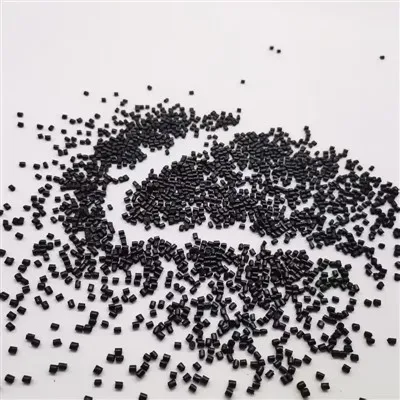
Now, I know what some of you are thinking: “CPs sound great, but aren’t they unstable themselves?” I get it—early versions of CPs would degrade over time, right? Like, after a few hundred cycles, their conductivity would drop, and they’d stop working. But that’s not the case with the custom CPs we supply. We’ve spent years tweaking the molecular structure of our PANI, PEDOT:PSS, and polythiophene derivatives to make them durable in battery electrolytes, even the harsh ones used in high-voltage cathodes. We test every batch in our own lab: we put them in Li-ion, SSB, and ZIB setups, run thousands of charge-discharge cycles, and measure conductivity after every 500 cycles. Our CPs retain over 90% of their conductivity after 2,000 cycles—way better than the generic CPs you can buy from old suppliers. And they’re easy to use, too: most clients just add 1-3% of our CP powder or dispersion to their electrode mixes, or dip their separators in our solution. No fancy equipment, no retooling their entire production line. That’s a big selling point for battery makers who don’t want to overhaul their whole factory to get better performance.
I’ve been in this industry long enough to see fads come and go—remember when everyone thought silicon anodes would solve everything? They still have issues with swelling, but CPs are the complement that makes silicon anodes work, too. Same with SSBs: they’re almost ready for market, but they need the right interlayers and interface materials, and CPs are leading that charge. The thing I love most about supplying CPs is that we’re not just selling a chemical—we’re helping teams fix real problems, make batteries safer, last longer, charge faster, and be more sustainable. The battery industry right now is at a crossroads: everyone wants better batteries for EVs, energy storage, and portable tech, but the materials to do it aren’t always there. CPs are one of the most versatile tools we have right now, and we’re proud to be at the forefront of supplying them.
Conductive Polymer If you’re a battery lab, an automaker, an energy storage company, or a startup working on next-gen batteries and you’re tired of dealing with cycle life, charge time, or safety issues, let’s chat. We can send you sample CPs tailored to your specific battery type, run quick tests for you, and figure out how to integrate our materials into your design without hassle. No long sales pitches, no fine print—just real, functional materials that work.
References
- Nair, S. S., et al. (2021). Conducting polymers as multifunctional materials for advanced lithium-ion batteries. Journal of Power Sources, 498, 229987.
- Liu, Y., et al. (2022). Conducting polymer interlayers for solid-state lithium metal batteries. Advanced Energy Materials, 12(15), 2103895.
- Wang, H., et al. (2020). Polyaniline-coated zinc anodes for stable aqueous zinc-ion batteries. ACS Energy Letters, 5(10), 3217-3225.
- Zhang, L., et al. (2019). PEDOT:PSS as a conductive additive for high-rate lithium iron phosphate cathodes. Journal of The Electrochemical Society, 166(14), A3219-A3226.
- Lee, J., et al. (2023). Conducting polymer-based separators for fast-charging lithium-ion batteries. Electrochemistry Communications, 150, 107421.
Jiangxi Sugo Advanced Materials Co., Ltd.
With abundant experience, we are one of the most professional conductive polymer manufacturers in China. Please feel free to buy high quality conductive polymer in stock here and get free sample from our factory. We also accept customized orders.
Address: 1st Fugong Rd, Futian Industrial Park, Dingnan, Ganzhou City, Jiangxi Prov., R.P.C 341900
E-mail: EILEEN@SUGOPLAS.COM
WebSite: https://www.sugo-esd.com/
